The Craft
Writing built from your memories
Every piece we make is carried by its words. Here is where they come from, and what they sound like.
Where the words come from
Not a template with a name dropped in
Most memorial verse is written once and sold ten thousand times. It rhymes, it consoles, and it could be about anyone – which means it is about no one.
We work the other way around. Before anything is written, we ask you questions: what you called them, what made them themselves, the moment you keep returning to. The answers – the flat tennis ball, the bread that never needed a recipe, the four o’clock spot on the windowsill – become the bones of the piece.
The writing succeeds only if it could not be about anyone else.
Your hand on every line
You read it all before it prints
You read the draft as it takes shape – reshape it, ask for another take, or change a single word that is not quite theirs. You also choose the form: a tribute in the third person, a portrait of them in words, or a letter.
When it is right, you approve the proof – the complete piece, exactly as it will print – and only then do you pay. A person at the studio reviews every order before it goes to print.
What it sounds like
Three pieces we made, and what their families told us to work from. Select any piece to read it whole.
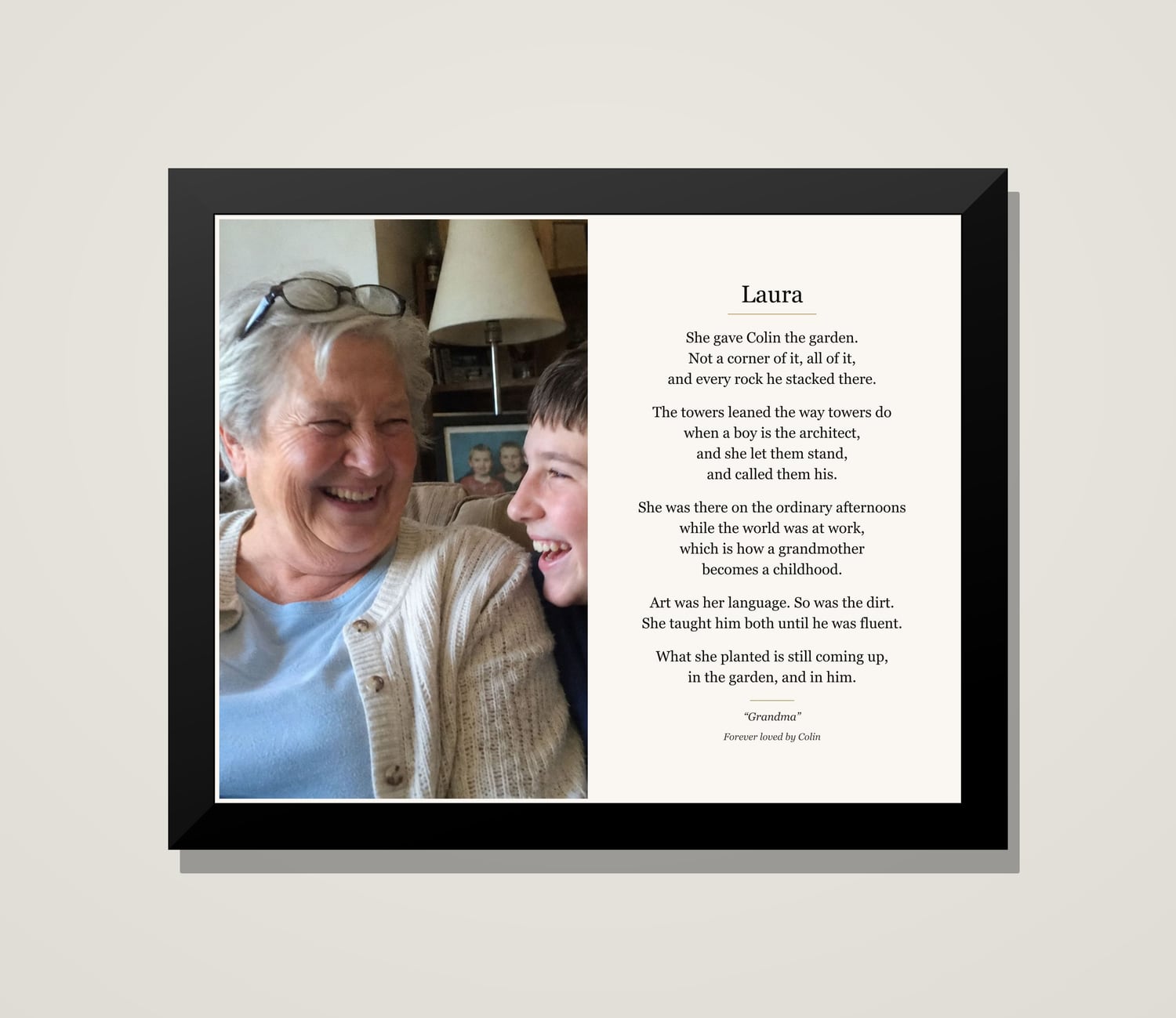
She was there on the ordinary afternoons
while the world was at work,
which is how a grandmother
becomes a childhood.
Art was her language. So was the dirt.
She taught him both until he was fluent.
What she planted is still coming up,
in the garden, and in him.
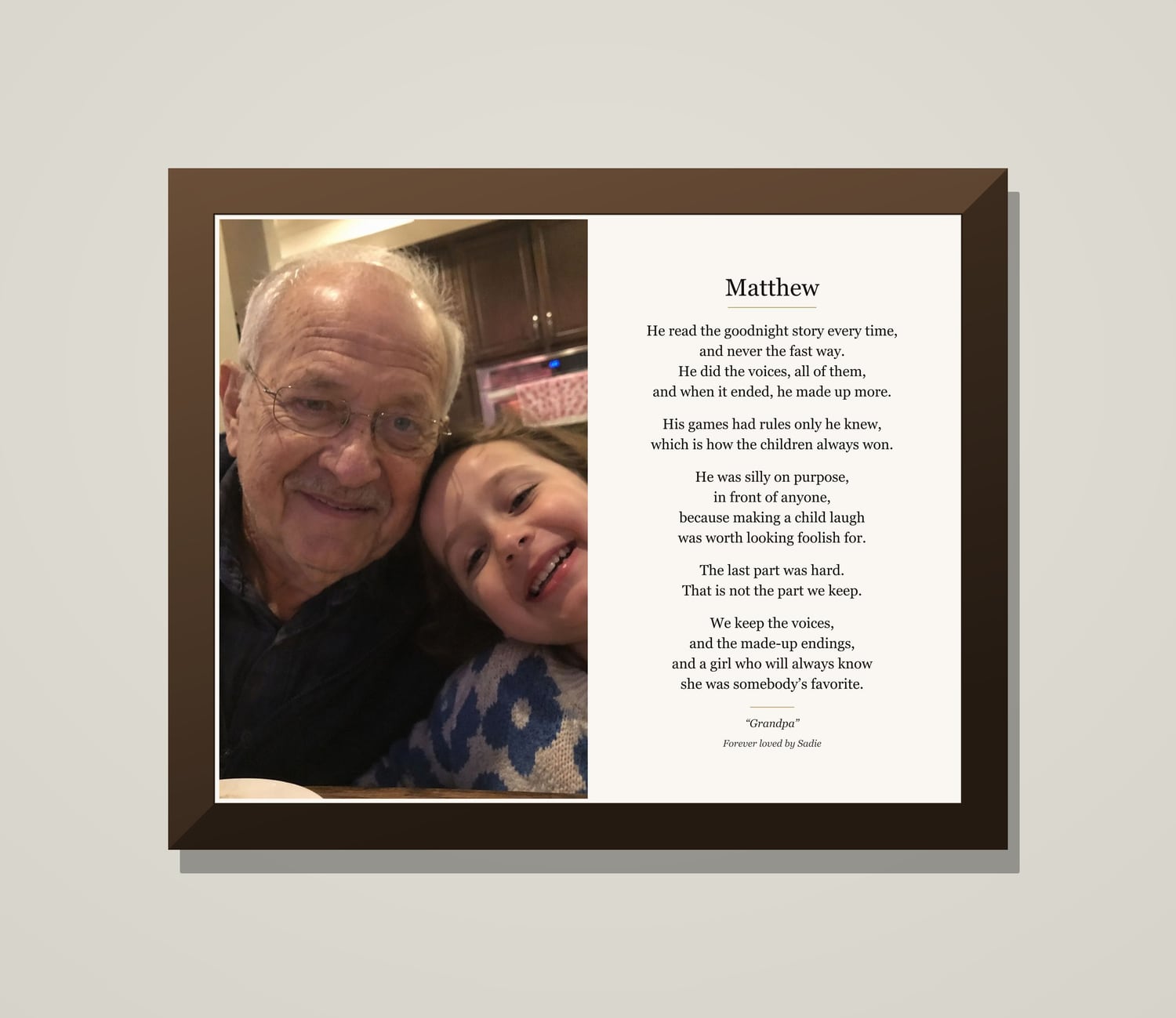
He read the goodnight story every time,
and never the fast way.
He did the voices, all of them,
and when it ended, he made up more.
The last part was hard.
That is not the part we keep.
We keep the voices,
and the made-up endings,
and a girl who will always know
she was somebody’s favorite.
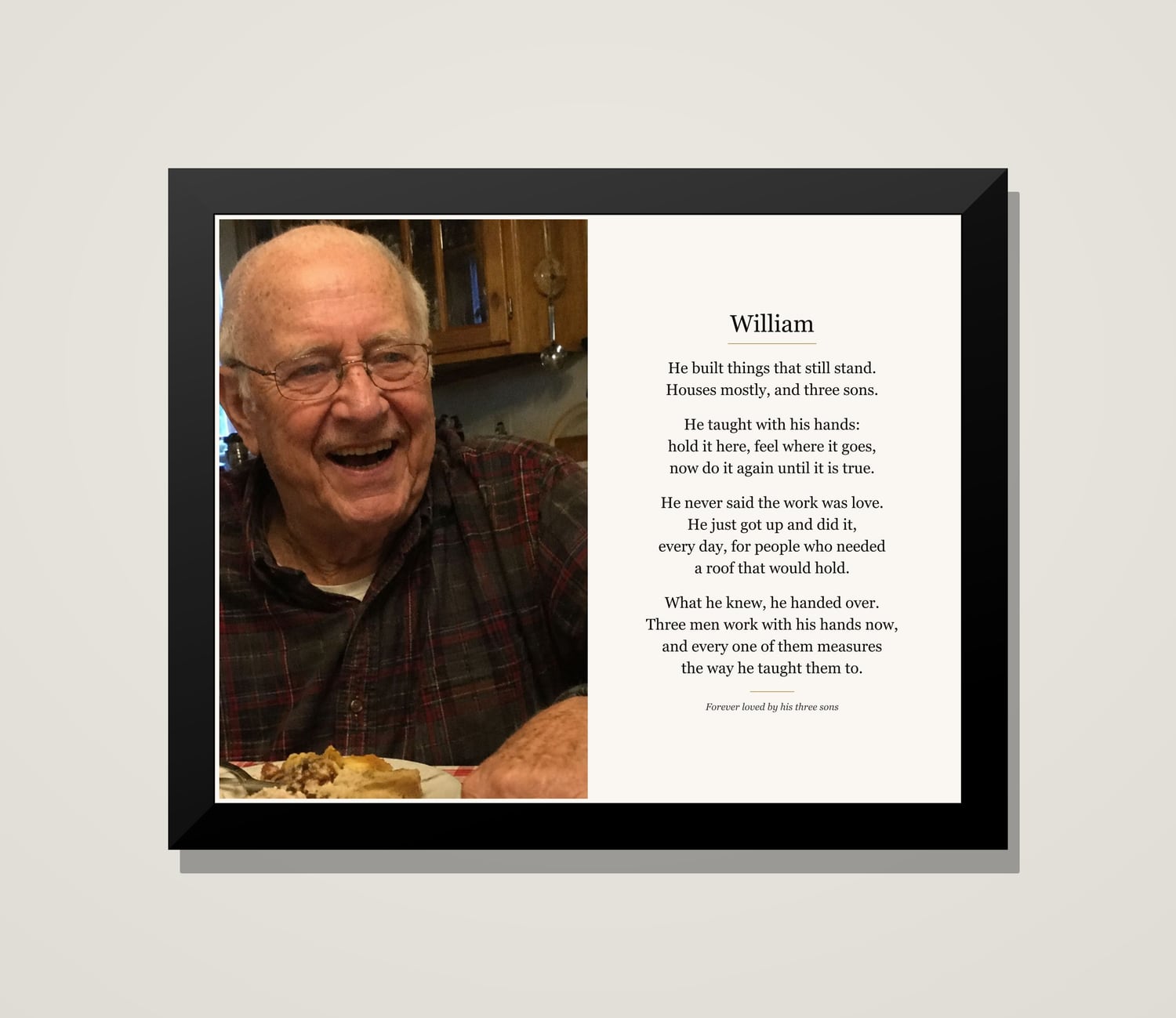
He built things that still stand.
Houses mostly, and three sons.
He taught with his hands:
hold it here, feel where it goes,
now do it again until it is true.
He never said the work was love.
He just got up and did it.
The next one is written from your memories
Read every word before it prints. Pay only when you approve.
Begin their tribute