Giving a Tribute
The condolence gift that stays
Flowers say you are thinking of them this week. A framed tribute – written from real memories, signed from you – says the one they loved is still worth knowing, and keeps saying it.
How gifting works
You do the remembering and the approving. We do the rest, quietly.
You share the memories you know
A photo and whatever you have – the story your friend always tells about her mother, or the things everyone knew about their father. Secondhand memories work; you knew of them through someone you care about, and that is enough to write from.
We write and design the piece
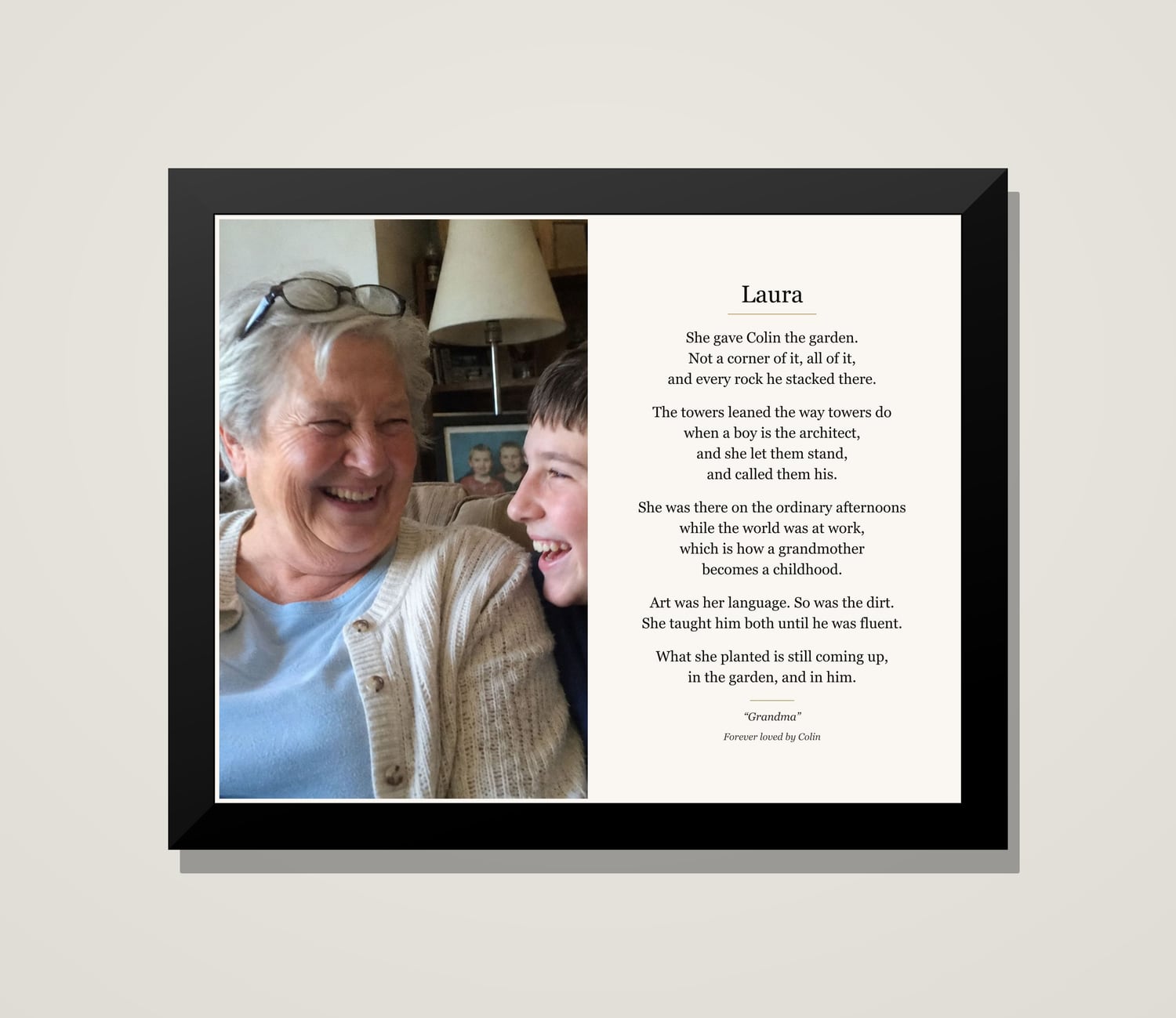
An original tribute or letter is built from what you shared and typeset beside the photograph on cream paper.
You approve the proof before paying
You see the complete piece exactly as it will print, and change anything that is not quite right. This matters most with a gift: you know the recipient, so you are the right judge of every word.
It arrives from you, not from us
The framed piece ships gift-ready, with a note card printed on the same cream paper – your words, signed from you. Nothing in the box reads like it came from a company.
On timing
There is no wrong time
Most sympathy arrives in the first week and stops. The harder stretch comes after – the second week, the second month – when the flowers have faded and the checking-in slows down. A tribute that arrives then often means the most.
And later is still not too late. Months on, even years on, a piece like this does not say I forgot until now. It says they are still worth remembering. Grief keeps no calendar, and neither does this gift.
If you want it to land on a particular date – a birthday, an anniversary – allow roughly two weeks from approving your proof.
What it says
That they were known
A sympathy card says you are sorry. A framed tribute says something rarer: that the one they loved was known – truly, specifically known – and is still worth knowing. It hangs on the wall and keeps saying it, every day.
The craft is the same in every piece: original writing from real memories, a giclée print in a gallery frame, and your signed note card in the box.
Give them something that stays on the wall
You will see and approve the finished piece before you pay.
Begin their tribute